Simplifying the Transition from Biomarker Discovery to Validation with a Flexible Approach to Multiplex Immunofluorescence

Key takeaways:
- Discovery-to-validation transitions often stall when high-plex discovery platforms rely on proprietary reagent ecosystems that fail to translate into scalable, reproducible validation workflows.
- Revolune's multiplex IF reagents work directly with existing, validated same-species primary antibodies, letting researchers carry a discovery-stage panel into validation without redesigning it around a new detection chemistry.
- Because the workflow eliminates cyclic stripping and repeated tissue handling, it preserves tissue integrity across rounds, which directly supports the reproducibility that validation studies demand.
- In a head-to-head NSCLC tissue evaluation, Revolune's multiplex IF detected CD3-positive T cell populations that a traditional TSA-based protocol missed, underscoring how assay choice can directly affect biomarker interpretation in the tumor microenvironment.
Biomarker discovery can be a lengthy and expensive venture—and it is only the beginning phase of assay development. Once a biomarker candidate or biomarker signature is identified, it must be validated for robustness and reliability across multiple samples and under various conditions. Depending on the method chosen for validation, the results obtained in the discovery phase may not translate well into the validation phase. A flexible approach to multiplex immunofluorescence (multiplex IF) is simplifying that transition for antibody-based biomarker studies, and the workflow is now more accessible than many researchers expect.
At What Stage Does Biomarker Validation Frequently Stall?
Discovery and validation serve different purposes and place different demands on an assay. Discovery casts a wide net: high-plex platforms screen dozens of targets within tissues to identify biomarker candidates. Validation takes the opposite approach, using low-plex or singleplex assays to confirm biomarker performance across large sample sets, operators, and testing sites.
The transition from discovery assay to validation assay is where many programs lose momentum. High-plex discovery platforms often rely on proprietary reagent ecosystems that do not translate into scalable validation workflows. Researchers are left with two options: rebuild the assay from scratch for a new platform, or fall back on singleplex immunohistochemistry, which lacks the spatial resolution needed to capture co-expression patterns and cellular relationships. Multiplex IF offers a third path. It delivers data that preserves spatial context and co-expression information without sacrificing reproducibility, automation compatibility, or scalability.
How Does Revolune's Flexible Multiplex IF Platform Support Scalable Validation?
Revolune's reagent system simplifies validation. Rather than asking researchers to adopt proprietary reagents or redesign a panel around a new detection chemistry, Revolune's multiplex IF staining reagents work directly with the same-species primary antibodies already validated for discovery workflows. If an antibody performs reliably in standard IHC, it can generally be carried forward into a Revolune multiplex IF panel without re-optimization.
This flexibility matters because validation studies rely on reproducibility. Revolune specializes in low-plex immunofluorescence assays, purpose-built for the targeted panels that validation studies require. Whereas traditional multiplex IHC and multiplex IF workflows can be damaging to tissues, compromising biomarker integrity and assay repeatability, in the Revolune workflow there is no cyclic stripping between rounds, no repeated handling that risks damaging the tissue section, and no extensive per-target optimization.
Because the chemistry is compatible with standard FFPE preparation and familiar primary antibodies, a lab can move from a validated IHC panel to a multiplex immunofluorescence assay without acquiring a new instrument platform or a new set of proprietary consumables. By generating the single-cell, spatially resolved data needed for biomarker validation through multiplex IF, assay development for applications such as immuno-oncology is accelerated.
How Does Revolune's Multiplex IF Workflow Enhance Reproducibility in the Tumor Microenvironment?
The tumor microenvironment (TME) is defined by its cellular complexity. Tumor cells, immune populations, and stromal components sit in close proximity, and their spatial relationships often carry more biological meaning than any single marker's expression level. A biomarker validated in isolation can behave very differently once its spatial relationships to surrounding cell populations are accounted for, which makes reproducible tumor microenvironment analysis one of the harder requirements a validation workflow has to meet.
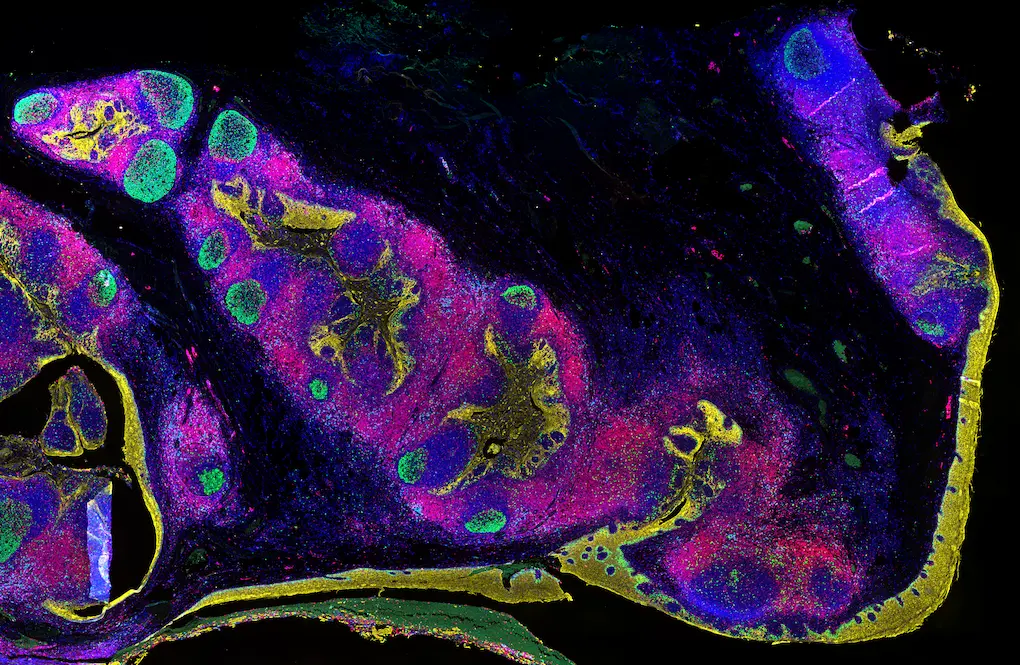
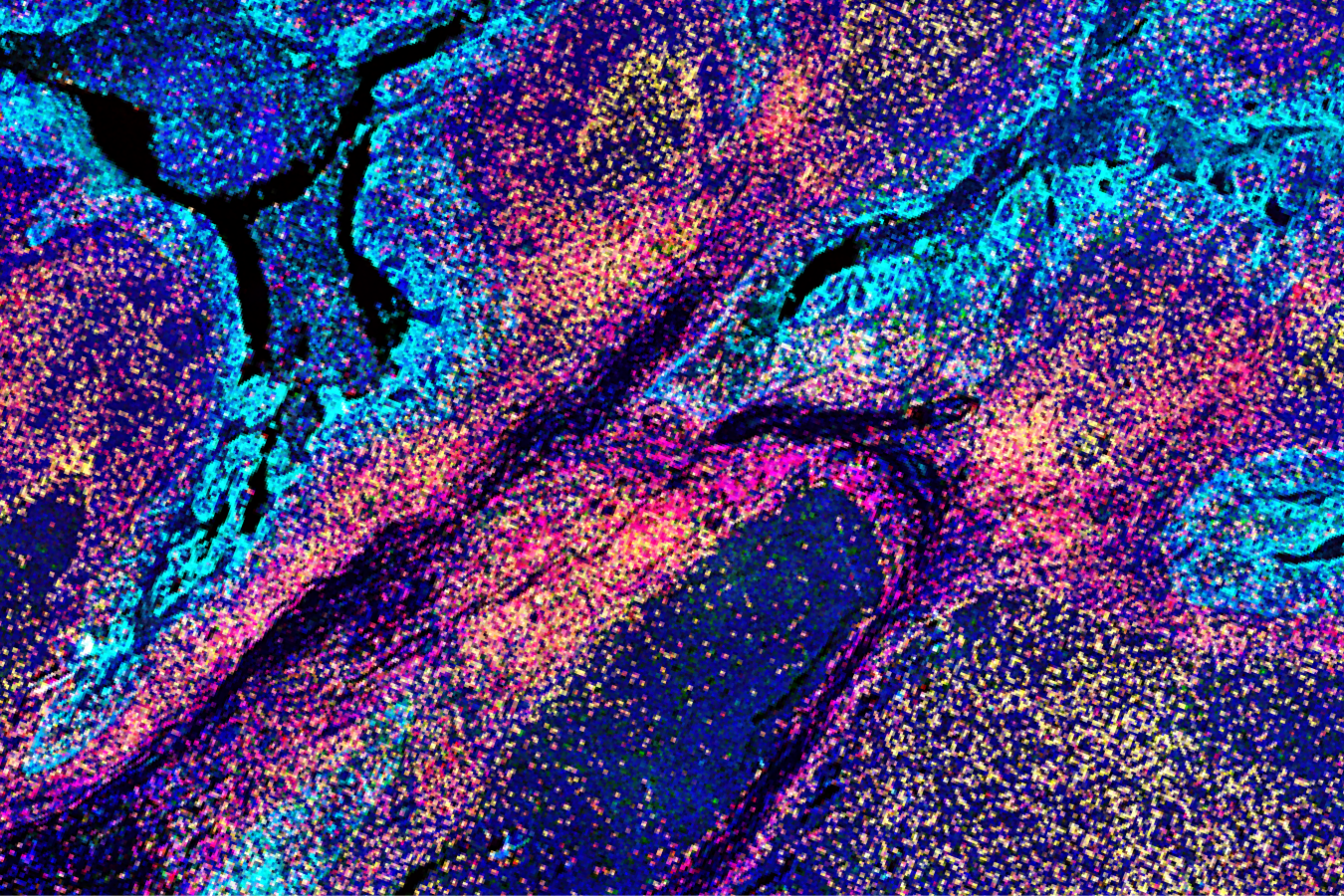
Revolune's multiplex IF reveals immune cell phenotypes, co-expression patterns, and spatial relationships within the TME that are difficult to reproduce with standard IHC or traditional multiplex IF workflows built on cyclic staining. Because the workflow avoids repeated stripping and re-staining cycles, the tissue section stays intact across experiments. This preserved integrity is what enables reproducible biomarker detection in the TME.
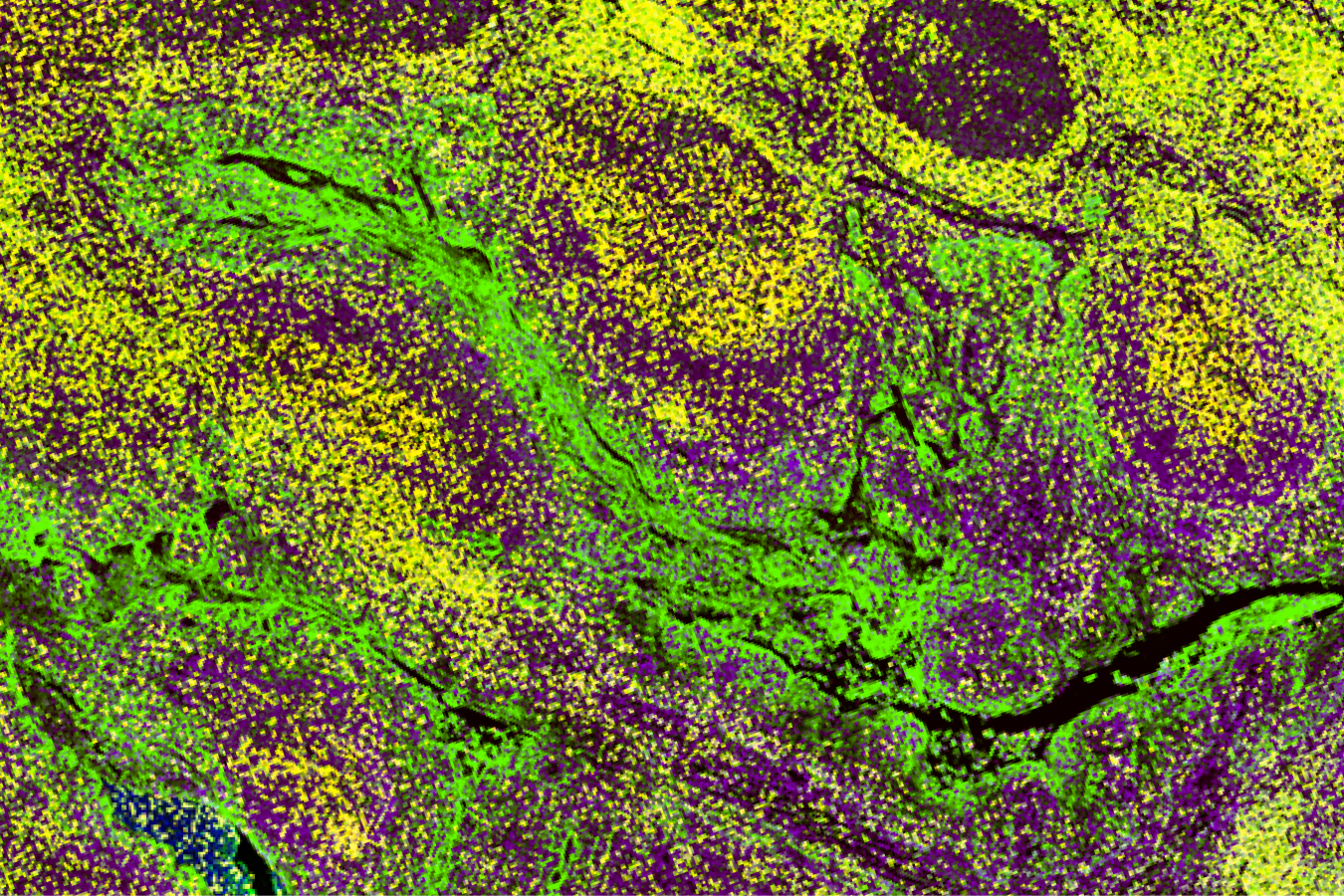
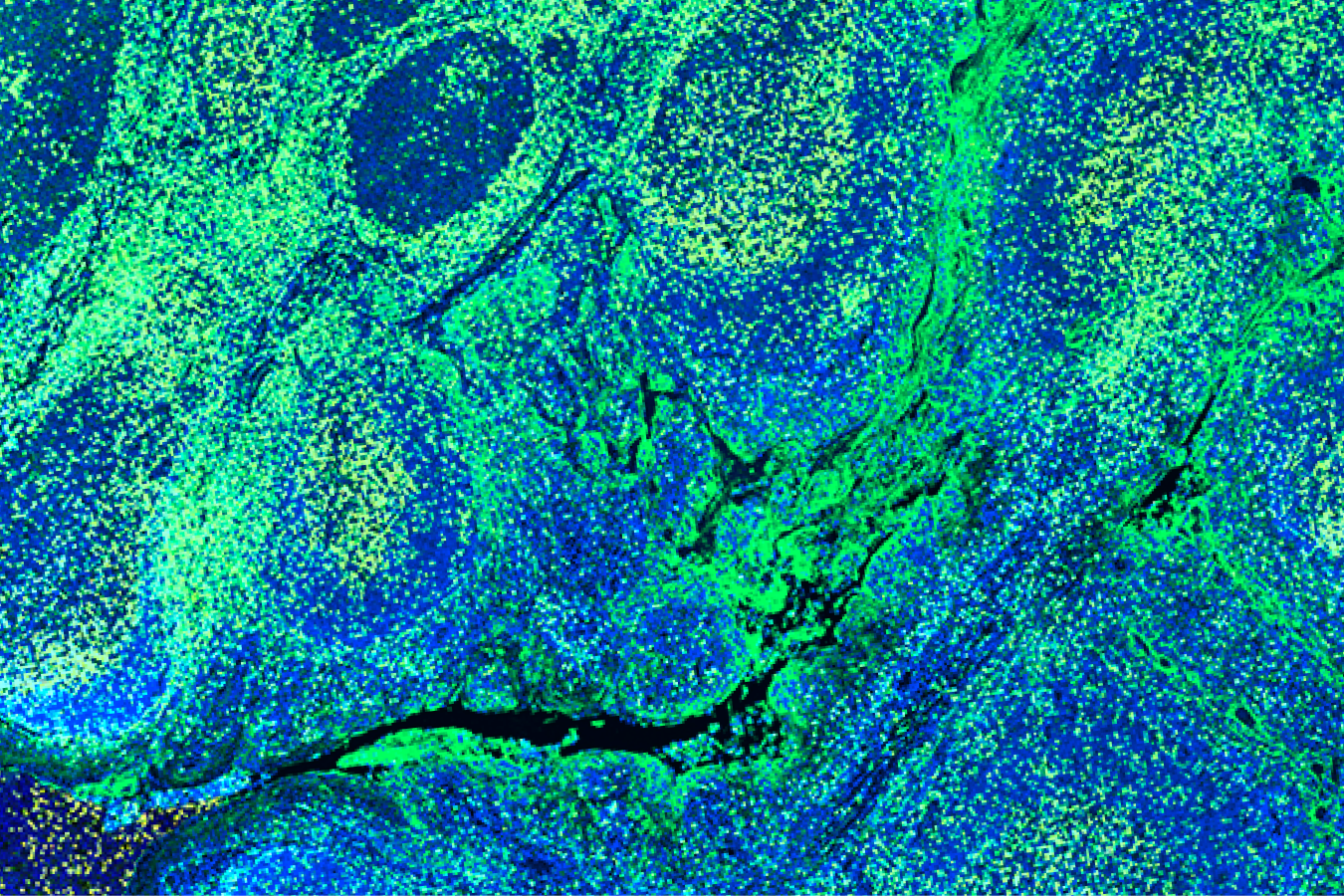
A recent customer evaluation illustrates the difference this makes (Figure 1). Using the customer's existing primary antibody panel (Ki67, CD3, CD8, FoxP3, and PanCK) in the Revolune multiplex IF workflow, CD3-positive T cell signals were detected in NSCLC tissue that were absent in samples processed using a tyramide signal amplification (TSA) protocol.
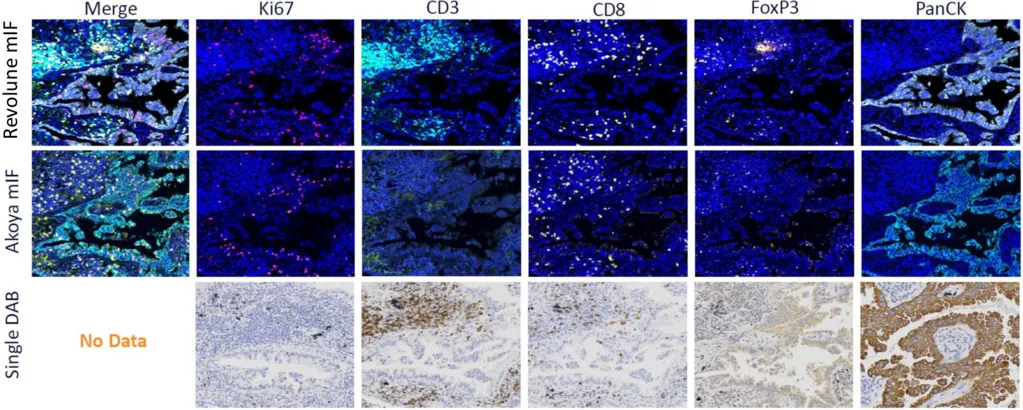
In a validation context, every missed cell population introduces a blind spot into downstream analysis, and that gap can carry directly into how a biomarker's performance is interpreted across a study. Reproducibility and sensitivity have become central to precision oncology where biomarkers are used to stratify patients for clinical trials, guide treatment regimens, and monitor responder versus non-responder status during therapy.
Advancing Biomarker Development
Biomarker validation should not be the stage where a promising candidate loses momentum. By keeping the antibodies, the tissue, and the workflow familiar, Revolune simplifies the transition from biomarker discovery to validation, giving researchers the reproducibility and spatial resolution needed to advance biomarker development and empower precision applications.
If your team is advancing biomarker candidates from discovery into validation and you need a multiplex IF workflow that fits into existing laboratory infrastructure, explore Revolune's reagent portfolio or learn more about the technology.
.webp)